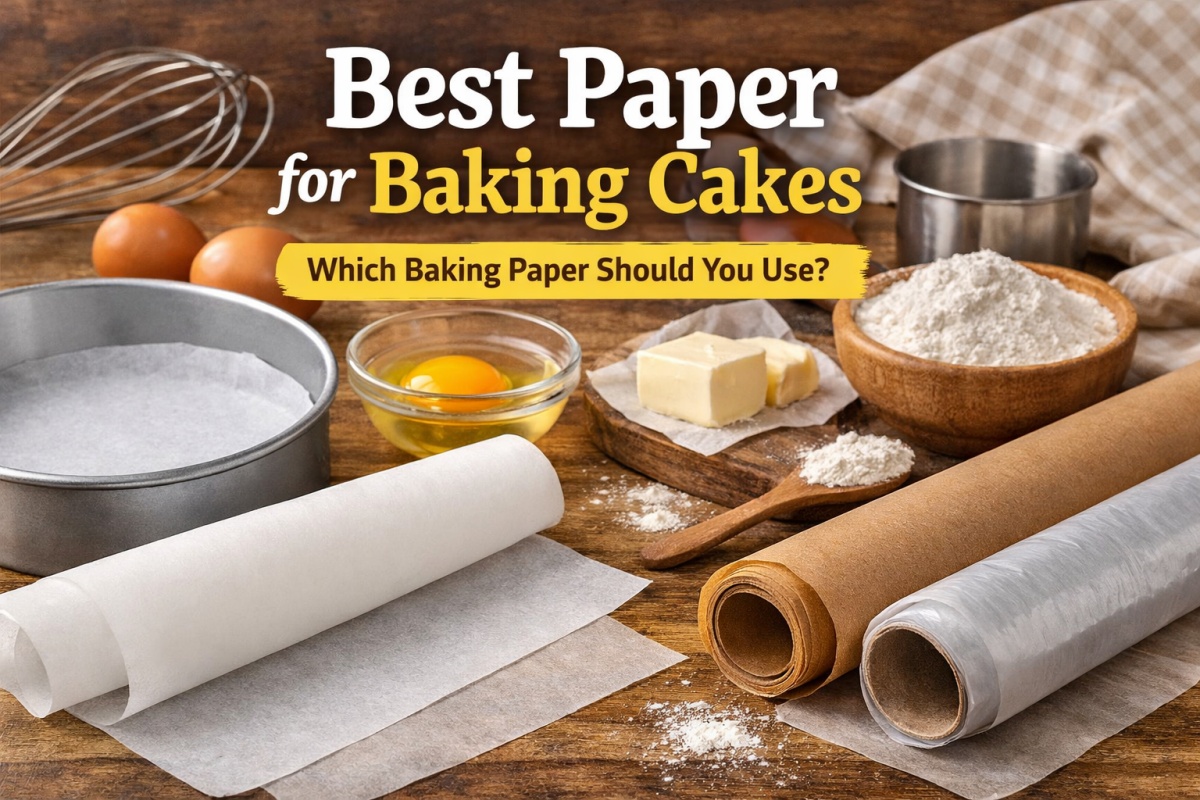
Introduction: What Is the Best Paper for Baking Cakes?
Choosing the best paper for baking cakes is not just a matter of convenience—it directly affects cake release, texture, moisture balance, and overall presentation. Whether you are baking sponge cakes at home or producing layered cakes in a commercial kitchen, the type of baking paper you use plays a critical role in achieving consistent, professional results.
This guide focuses specifically on identifying the best paper for baking cakes, explaining why certain papers perform better than others, and helping bakers avoid common mistakes.
What Makes the Best Paper for Baking Cakes?
Before comparing options, it is important to understand what qualifies as the best paper for baking cakes. High-performing cake baking paper should meet the following criteria:
- Reliable non-stick performance without excessive greasing
- High heat resistance suitable for cake-baking temperatures
- Balanced moisture control to prevent soggy or dry cake bottoms
- Food-safe materials approved for direct contact with batter
- Easy removal that protects cake structure and crumb
Any paper that fails to meet these standards should not be considered suitable for cake baking.
Parchment Paper: The Best Paper for Baking Cakes
Why Parchment Paper Is Ideal for Cake Baking
Parchment paper is widely regarded as the best paper for baking cakes due to its silicone-treated surface and excellent heat resistance. Unlike other paper types, parchment paper is designed specifically for oven use, making it highly reliable for cakes that require steady, even heat.
Key benefits of parchment paper for cake baking include:
- Natural non-stick surface that prevents cakes from tearing
- Stable performance at temperatures up to approximately 420–450°F (215–230°C)
- Even heat distribution that supports uniform cake structure
- Reduced need for added oils or butter
Clear comparisons between parchment paper and other baking papers show why parchment consistently delivers superior cake release and cleaner pan results.
Best Cake Types to Use with Parchment Paper
Because it offers consistent performance, parchment paper is the best paper for baking cakes such as:
- Sponge cakes and chiffon cakes
- Layer cakes and celebration cakes
- Sheet cakes and slab cakes
- High-sugar batters that are prone to sticking
For round cake pans, pre-cut parchment sheets help ensure smooth release and uniform presentation.
Why Wax Paper Is Not the Best Paper for Baking Cakes
Wax paper is often mistaken for baking paper, but it is not the best paper for baking cakes. Wax paper is coated with paraffin wax, which is not designed to withstand oven heat.
Problems caused by using wax paper for cake baking include:
- Wax melting into cake batter
- Smoke or unpleasant odors in the oven
- Increased risk of sticking and uneven baking
- Potential food safety concerns at high temperatures
Many kitchen and baking guides clearly explain that wax paper is intended for cold food applications, not oven baking.
Baking Paper vs. Greased Cake Pans
Some bakers rely solely on greasing pans, but greasing alone does not provide the same reliability as using the best paper for baking cakes. Compared with greased pans, baking with parchment paper:
- Improves cake release consistency
- Reduces excess grease absorption
- Minimizes pan damage and cleanup time
- Helps maintain cake shape and crumb integrity
For both home bakers and professional kitchens, parchment paper offers more predictable results than grease alone.
Silicone Baking Mats: Are They the Best Paper for Baking Cakes?
Although silicone baking mats are reusable and non-stick, they are not considered the best paper for baking cakes. Silicone mats limit airflow at the base of the cake and may affect browning, especially for thicker batters or tall cakes.
They are better suited for cookies and pastries rather than cakes that require precise heat transfer.
Choosing Professional Baking Paper for Cakes
High-quality baking paper is available in unbleached, bleached, pre-cut, and roll formats. For cakes, unbleached parchment paper is often preferred due to its clean release performance and minimal chemical processing.
Using professional-grade parchment paper supports:
- Consistent baking outcomes
- Cleaner pan release
- Improved production efficiency in commercial settings
FAQ
Can I bake a cake without parchment paper?
Yes, but results are less consistent. Without the best paper for baking cakes, delicate cakes are more likely to stick or break when removed from the pan.
Do I need to grease parchment paper for cakes?
In most cases, greasing is unnecessary. Parchment paper alone usually provides sufficient non-stick performance.
Is baking paper reusable for cake baking?
Parchment paper may be reused once if clean and intact, but single-use is recommended for best hygiene and consistent results.
Conclusion: What Is the Best Paper for Baking Cakes?
When evaluating performance, safety, and consistency, parchment paper is clearly the best paper for baking cakes. It outperforms wax paper, greased pans, and silicone mats by delivering clean release, stable heat resistance, and reliable baking results.
For bakers who want professional-quality cakes with minimal risk and cleanup, investing in the right parchment paper is a simple decision that makes a significant difference.